ARTISTS & PROJECTS
Anne Fie Salverda
Breaking Light / Projection, light installation
Frisian visual artist Anne Fie Salverda draws inspiration for her work from the ever-present natural world around her. Breaking Light begins with the fact that some 50 to 80 per cent of the world’s oxygen production—through photosynthesis—originates in the ocean. The work takes its cue from water reflections and the recreation of these in places where one would least expect them. In doing so, Anne Fie evokes a sense of wonder through her animation, in which she explores the interplay of water, light, and the life it sustains
Anne Fie Salverda (1995, NL) is an animator and visual artist from Leeuwarden, fascinated by capturing the world around her. She pushes at the boundaries of imagination, quoting the world in her work but also twisting it into new forms. Through poetic animations, she tells non-verbal stories that remain open to personal interpretation.
Anže Kreč
The Knot / self-sufficing light installation
The Knot is self-sufficing light installation is based on three hand-held electric generators, which the spectators use to generate their own electricity. This is needed to achieve the light effects in the LED strips above the spectators’ heads, woven into a knot or loop that allows the light trails to repeat cyclically. The greater the power of the energy invested, the more powerful the light effect – the project symbolises the effort we as individuals or as a community invest into the functioning of society – as we tirelessly turn the handles in an intangible compulsion to use our own energy to power the system that shapes our daily lives in a feedback loop. The project, which combines analogue and digital elements in an ingenious way, thus addresses the meaningfulness of human action and existence, meanwhile questioning the individual’s autonomy, purpose and role in the wider society
Anže Kreč is a light and sound designer, set designer, performer, dancer. He is an innovator in the field of stage technique. He started his career at Šentjakob Theatre and Choreodrama as a light and sound technician, and later collaborated with various theatres and festivals as a light designer and constructor of stage aerial devices. In recent years, he has also been involved in film production in various roles.
A/V2V
Companion Cube: Subsurface / AV installation
Companion Cube: Subsurface is the second iteration of the Companion Cube audiovisual installation, which explores collaboration as a fundamental aspect of contemporary artistic practice through projection mapping. The project brings together four artists from Slovenia and Italy, who develop a shared audiovisual composition through sound, moving image, and spatial projection. The music and visual content are created within a common conceptual framework and adapted to the specific characteristics of the projection object.
Thomas Versa creates immersive audiovisual environments that combine craft-based approaches with digital technologies. Virage explores the relationship between sound, moving image, and analogue and digital media through live AV performances, installations, and film. Črt Trkman (Terranigma) works at the intersection of sound, space, and electronic music, creating spatial sound installations and AV projects. Urša Čuk (rastrLAB) creates generative visuals, video mapping, and immersive installations that explore perception, time, and instability. Stella Ivšek (VJ 5237), an intermedia artist, VJ, and co-founder of the BEAM TEAM collective, works across live visual performance, video mapping, installation, and scenography, and runs the V2V platform, which connects artists working in video art and AV performance.
Vizualizacije: Urša Čuk, Virage, Thomas Versa
Glasbena produkcija: Črt Trkman
Umetniško vodenje: Stella Ivšek / BEAM TEAM
Tech support: Forum Ljubljana, Slovenska kinoteka, Zavod Projekt Atol
Produced by: Ljudmila, Art and Science Lab, and supported by the Municipality of Ljubljana.
Damjan Šporčić
Fish Food. Back on the Menu / Animation
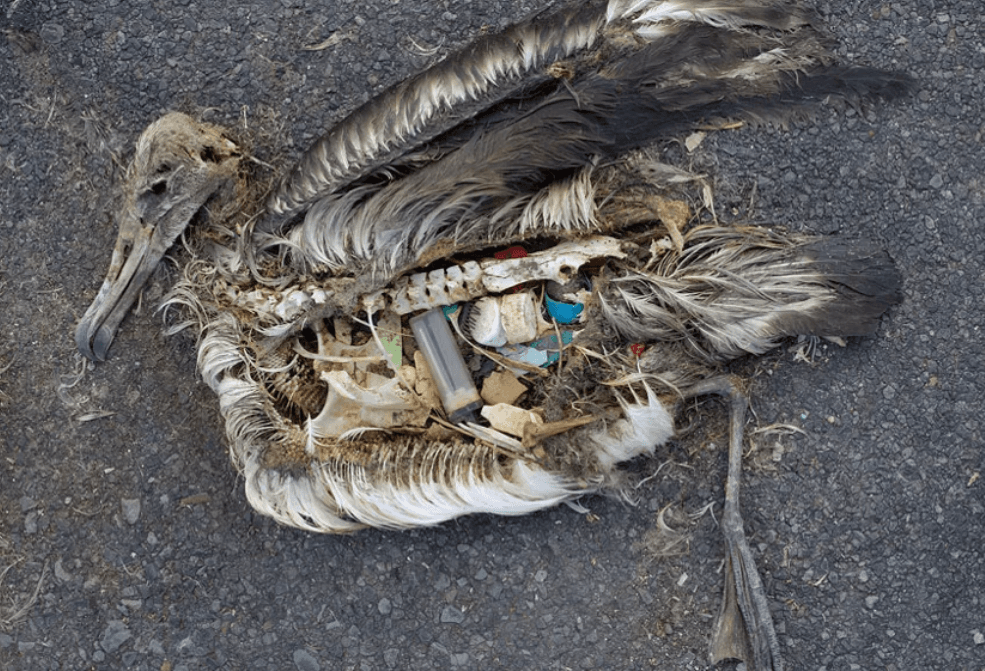
The work is based on small plastic debris that the artist has collected over the years on the beaches of Kvarner, without any predetermined plan or target quantity—simply whenever the opportunity arose while spending time in nature. The collected material was initially kept in jars, much like food preserved for winter, which also gave the work its title—an ironic play on words that ceases to be a joke once it ends up in the sea, where that same plastic literally becomes food for fish, who swallow it after mistaking it for plankton. Here, collecting is a symbolic gesture rather than a solution—it stops nothing, merely recording what has already happened. What remains is the material itself: a surprising diversity of products that people use and discard every day, yet which remain recognisable by their colour and shape long after losing their original function. A separate animation was created for each colour.
Damjan Šporčić (Oblik 3) is a multidisciplinary artist and AV producer from the Kvarner region, who has been active on the independent cultural scene for more than two decades. His work combines video mapping, VJing, scenography, and light installations with handcrafted work in stone, wood, and other recycled materials—two sides of the same artistic practice, digital and physical, that rarely exist independently of one another. Material for works like this is often found in the very place where he spends most of his time—the natural environment that surrounds him.
Jazmin Rojas Forero
Bodies Inside Each Other / Multimedia installation
In the high mountains of Colombia grows the frailejón, a plant that captures moisture from the fog through its leaves and then releases the water through its roots. Bodies Inside Each Other is an installation that explores the relationship between the frailejón and its environment. An ice-filled glass bowl inspired by the inside of the plant transforms the ice through condensation into drops of water, which are collected in a ceramic bowl shaped like the plant’s stem. Jazmin Rojas Forero sees her sculpture as a body in which the atmosphere can manifest itself.
Photo / Syrine Bettaleb
In her installations and films, artist, and filmmaker Jazmin Rojas Forero (1995, CO) interweaves fiction, science, non-human perspectives, and her personal desire to create sensual and compelling poetic gestures. She embraces non-Western knowledge to cast and restore the relationship between humans and non-humans in a new light.
Lotte Beets
Observations at Low Tide / installation
How can we experience a landscape with our whole body, not just through our eyes? What changes when we sit on the same bench but listen to classical music one moment and blues the next? Lotte Beets’ Observations at Low Tide offers a unique opportunity to pause and appreciate the subtle qualities of the sea that usually escape our attention.
All the tiles in the installation are casts made by hand during two weeks of low tide in Nieuwstad (near Bierum, Groningen). They depict small ripples in the sand, seaweed leaves, and sometimes even the remains of shells and small marine animals. Each tile invites us to take a closer look at a small fragment of the seabed. Together, however, they form an entire seabed. The only light in the space comes from the tiles themselves, inviting us to walk carefully among them.
Lotte Beets (NL) lives and works in Groningen. She is fascinated by the moments when the world impresses itself upon the body, and by the ways in which art and the environment are experienced—not only through the eyes, but physically and directly. The viewer is an essential part of this process: the installation is not meant merely to be seen, but to be experienced.
Lumoskop_lab
Plastc Bloom / Interactive Immersive Light Installation, 2026
Plastic, once a symbol of progress, has become one of the most enduring traces of modern civilisation. As it breaks down, microscopic particles are released into rivers, lakes and oceans, passing into the air, the soil and the food chain before ultimately entering the human body. Pollution is no longer merely part of the environment; it has become part of our biological reality.
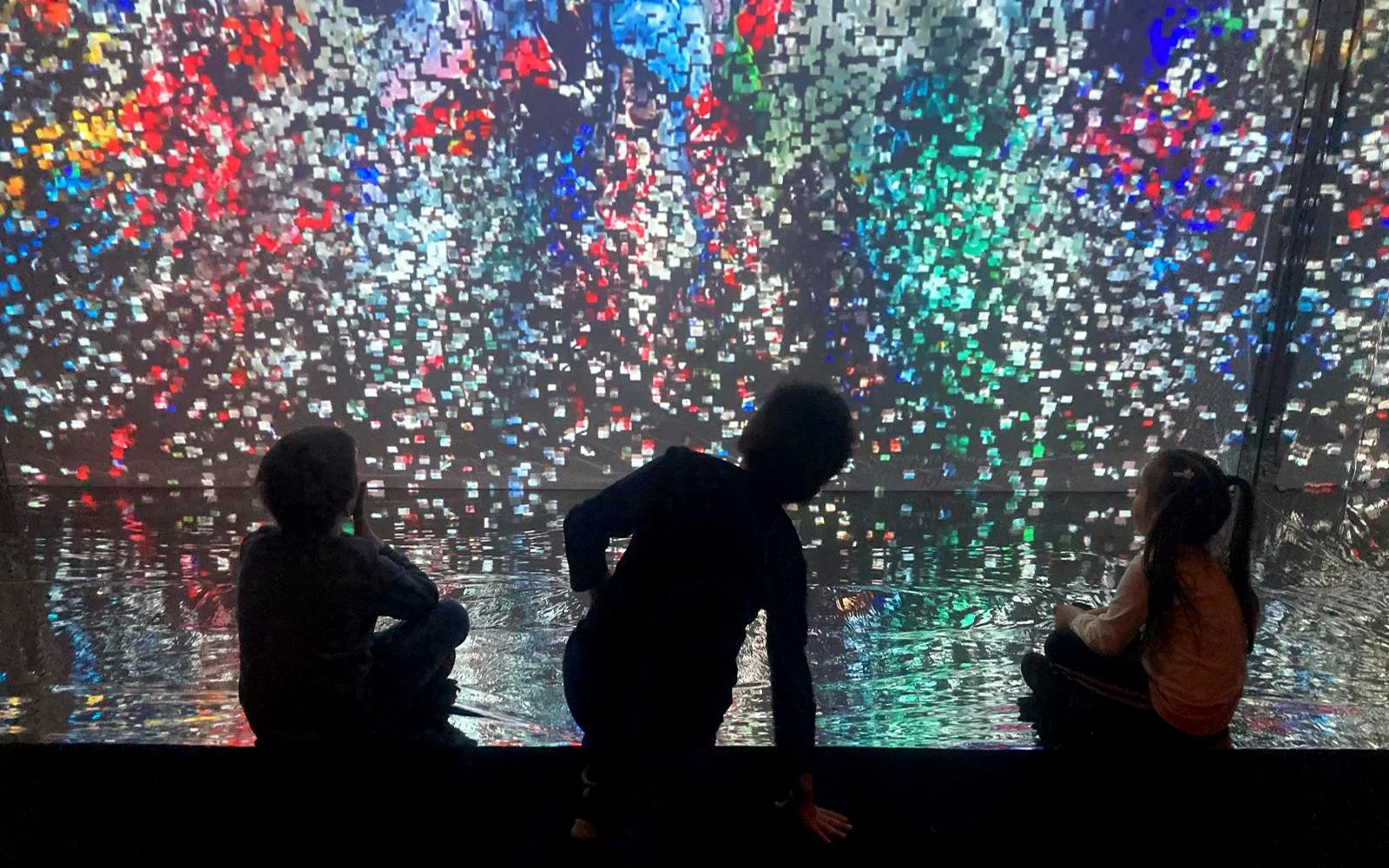
The project draws on research into the movement of microplastics through aquatic systems, developing a visual language based on the microscopic structures of microplastic particles. Their artistic interpretations were created from actual scientific microplastic samples developed in collaboration with researchers from Globe Italia. Forces, currents and vortices are translated into an interactive light environment, where the presence of visitors continually generates new relationships between bodies and suspended particles.
The particles gradually overtake the visitor's image, transforming the body into a hybrid of human and synthetic material. Microplastics are presented not as a distant ecological threat, but as a material trace of human activity that returns, through natural processes, to the environment, living organisms and ultimately to humans. Each particle carries the memory of its origin, becoming part of a continuous exchange between humanity and the environment.
Plastic Bloom does not depict a distant future, but a condition that already exists. The moment visitors enter the space, they cease to be mere observers and become part of the network of relationships, forces and material flows that the work explores.
Lumoskop_lab is an artist duo consisting of Sendi Mango and Jurij Pavlica, working at the intersection of light art, contemporary art, science, and creative technologies. Their practice combines light, generative media, artificial intelligence, spatial projection, and sound to create immersive installations and audiovisual environments. Their research explores the interplay between natural processes, data, and technologically mediated perception, opening up a space for reflection on environmental and societal issues.
Author / Lumoskop_lab
Production / DDT Trbovlje and Zavod ROR, 2026
Technical Development and Production Support / Trbovlje New Media Town Association (TNM)
Creative Technologist (TNM) / Žiga Pavlovič
Special Thanks / GLOBE Italia for its extensive archive of underwater microplastics imagery, which served as a significant source of inspiration for the project's visual identity.
Marsja van der Ven
Tentacles of Change / installation
Long before the rise of the dinosaurs, our planet was ruled by the octopus. This fascinating and extraordinary creature has an extremely flexible body powered by jet propulsion, tentacles that can smell and taste, and skin that can “see” and mimic other animals—even plants. An octopus has multiple hearts and brains, remarkable intelligence, and adapts exceptionally well to changing environments. It thrives in warming seas and despite overfishing, flourishing in a world increasingly shaped by human activity. In her installation, Marsja van der Ven seeks to capture the many marvellous aspects of this magical creature.
Marsja van der Ven specialises in creating art from repurposed materials, balancing on the boundary between art and design. Her work often incorporates old machine parts and other recognisable steel objects, which she transforms into unusual and surprising creations—sometimes even functional ones.
Radu Ignat
An Eco-Warning in Light / Video projection, 2026
The video projection An Eco-Warning in Light uses the building's architecture as a living canvas to convey an urgent environmental message: our health is directly linked to the health of our water. The concept aims to rouse viewers from passivity, demonstrating that pollution is not a distant phenomenon but an invisible threat that inevitably turns back against our own lives. The striking visual contrast—shifting from the harmony of nature to the harshness of synthetic colours and, ultimately, to rebirth—is designed to evoke a profound emotional response. Microplastics are not merely waste in the oceans; they are a poison infiltrating the very fabric of life. Yet the spectacle goes beyond a mere warning, offering a note of hope. Through the cleansing wave at the end, the projection conveys that nature possesses the power to regenerate—but only if we acknowledge the impact of our actions. The closing message encapsulates the central idea: by protecting water, we protect ourselves.
Radu Ignat is a professional visual artist, metal sculptor and a member of the Union of Plastic Artists of Romania. His artistic media primarily consist of metal sculpting and 3D digital modelling. He is internationally recognized for his visual installations and video mapping. Ignat has participated in various competitions around the world and has presented his projects at international art festivals.
Robertina Šebjanič
Echoes of Abyss / Multimedia installation
Echoes of the Abyss is a series of research-based art projects addressing dumped (chemical) munitions and unexploded ordnance (UXO) on the ocean floor. These remnants of past conflicts continue to transform marine ecosystems, alter water chemistry, and affect human and more-than-human lives. They embody a form of slow violence that persists long after armed conflicts have ended. The project explores the entangled relationships between history, geopolitics, and marine environments, where submerged landscapes emerge not only as zones of contamination, but also as sites of of memory and resilience. Environmental consequences continue to unfold through the water column, sediments, and living bodies, carrying the toxic legacies of past conflicts.
Building on research conducted by the artist aboard the Tara Ocean Foundation vessel in the Baltic Sea and further developed through the MADE IN Platform in the Adriatic Sea, the project adopts an interdisciplinary approach developed through collaborations with oceanographers, marine scientists, ecologists, divers, sound engineers, and artisans. It weaves together layered narratives of conflict, ecological transformation, and more-than-human worlds. Through video essays, sound, glass objects, and wool tapestry, alongside knowledge-exchange platforms such as the Ocean Around Us – Echoes of the Abyss symposium, the work materializes invisible traces of slow violence, creating space to reflect on ecological harm and shared responsibility that continue to reverberate through waters, sediments, and living bodies long after conflicts have ended.
Robertina Šebjanič (SI, Ljubljana) is an artist-researcher working at the intersection of art, ecology and (geo)politics; exploring the rhythm, voices and ruptures of hydrosfare through interdisciplinary practice. Her work has been awarded by Prix Ars Electronica, STARTS Prize, Falling Walls, and Re:Humanism. She was artist-in-residencies/ got grants at: TBA21-OceanArchiv,UCLA PST.art, Emap, STARTS4Water, TARA Ocean Foundation, and MADE IN Platform; her works are included in collections as the New Art Foundation (Reus). Since 2023 she is Associate Professor at the School of Arts, University of Nova Gorica. She has lectured internationally at Stanford University Palo Alto, UCLA L.A., UN Ocean Conference (UNOC3) in Nice, UNAM Mexico City among others.. She has exhibited and performed on more then 100 internationally solo/group exhibitions at biennials, galleries, festivals and museums
Production / MADE IN Platform – Oaza & Drugo More (HR), 2024–2025
Zavod Projekt Atol (SI), 2024–2025
Tara Ocean Foundation (FR), 2023–2024
Artist / Robertina Šebjanič
Advisors / dr. Nataša Rogelja, dr. Matthias Brenner, prof. dr. Jacek Bełdowski, dr. Manca Bajec
(avdio mastering), Dmitry Morozov – VTOL, David Drolc & Jakob Grčman (technical support), Neža Mekota (3D visualization)
Collaborators / Ivanka Pasalic (glass), Marjeta Zornada, Tanja Minarik (photo, video & AI), Rok Kovač (audio mastering), Dmitry Morozov – VTOL, David Drolc & Jakob Grčman (technical support), Neža Mekota (3D rendering)
Collaborators / Ivanka Pasalic (glass), Marjeta Zornada, Tanja Minarik (photo, video & AI), Rok Kovač (audio mastering), Dmitry Morozov – VTOL, David Drolc & Jakob Grčman (technical support), Neža Mekota (3D rendering)
Special thanks/ Lučko Anti-Terrorist Unit Diving Team; Special Intervention Police Units Rijeka & Osijek; Alfred Wegener Institute Helmholtz Centre for Polar and Marine Research (AWI) – REMARCO project; Tara Ocean Foundation for archival AV materials.
Background voices in video essay / Contributions by participants of Ocean Around Us – Echoes of the Abyss symposium, organized by Robertina Šebjanič and Dr. Manca Bajec Cukrarna, Ljubljana, 25 October 2024.
Special thanks to the School of Arts, University of Nova Gorica, for their technical support.

Vincent Westra
Cry of light / Light installation
The sea is no easy place. As humans, we have little control over it; we are at the mercy of the wind, the rain, the mist, and the waves. Yet for centuries, people have ventured out to fish, explore, build, or transport.
This has forced us to find ways to survive, to communicate, and, above all, to be visible. We use foghorns, spinning bright lights and signals that scream out day and night: “I am here!” Whether anyone is nearby or not, the signal continues. A lighthouse does not stop sending its light simply because there is a moment of silence; it keeps casting its beam out of necessity. The project Cry of Light embodies this scream for attention, a physical translation of the human urge to be seen.
Vincent Westra (1995, NL) is a media artist based in Leeuwarden and a member of the artist collective BSTRDS. His work is inspired by the raw power of nature, which he also recognizes in nightlife and club culture. Working with light, image and sound, he explores presence and visibility, while questioning the illusion of choice in a world shaped by media, algorithms and advertising.
Concept / Vincent Westra (BSTRDS)
Design / Arnold Hingstman, Julius van der Veen (Straylightsleds)
GLOBE Italia, IzVRS & National Institute of Chemistry
Open Microplastics Laboratory
GLOBE ITALIA APS
GLOBE ITALIA APS Association coordinates the international environmental education program GLOBE in Italy, with NASA and NOAA as supporting scientific bodies. The GLOBE Program establishes a community in which students, scientists, and citizens collaborate to improve understanding of the Earth system and climate emergencies, drawing on observations and surveys conducted on their own soil as a source of inspiration for projects and actions.
GLOBE Italia uses a protocol for monitoring microplastics in surface waters, designed to involve schools, researchers, and citizens. Developed at the Institute for Frontier Materials at Deakin University, Australia, the protocol was created by the university in collaboration with GLOBE Italia APS Association, which subsequently implemented it in schools in more than 20 countries participating in the GLOBE Program.
IzVRS, the Institute of Waters of the Republic of Slovenia
The Institute for Water of the Republic of Slovenia (IzVRS) is the central national expert and research institution in the field of water management. Drawing on its interdisciplinary expertise, it provides professional support for the development and implementation of water policy and prepares expert assessments for legislation, strategic documents, water infrastructure planning, and the management of water resources. The activities of IzVRS cover the entire water cycle – from drinking water quality and water supply to the collection and treatment of municipal wastewater, the protection of water resources, water quality, and protection against the harmful effects of water. An important part of its research activities focuses on emerging pollutants, such as microplastics and micro-litter, as well as on the development of methods for their monitoring and analysis.
IzVRS participates in national and international research and development projects and brings together knowledge, data, and innovative solutions to support more resilient and sustainable water management. Through its work, it contributes to the protection of the aquatic environment, human health, and the achievement of national and European objectives in the field of water management.
The National Institute of Chemistry
The National Institute of Chemistry is an internationally recognized research organization working in the fields of chemistry and related disciplines. Founded in 1946 as the Chemical Laboratory of the Slovenian Academy of Sciences and Arts, it operates today as a public research institute dedicated to scientific research and research and development.
Its fundamental and applied research focuses on areas of long-term importance both to Slovenia and internationally, including materials science, life sciences, biotechnology, chemical engineering, structural and theoretical chemistry, analytical chemistry, and environmental protection. The Institute’s research activities are closely connected with the needs of the Slovenian and international pharmaceutical, chemical, automotive, and nanobiotechnology industries.
The Institute’s research also addresses major European and global challenges, including nanotechnology, genomics and biotechnology for health, climate change, energy, sustainable development, global environmental change, and food quality and safety.
Education and training are an important part of the Institute’s activities. Through its programmes for early-career researchers, the Institute provides doctoral training for approximately 130 postgraduate students, representing around 34% of its staff. In cooperation with universities and higher-education institutions in Slovenia and abroad, the National Institute of Chemistry therefore plays an important role in postgraduate education and research training.
THE PROJECT Tethys4Adrion / IzVRS & National Institute of Chemistry
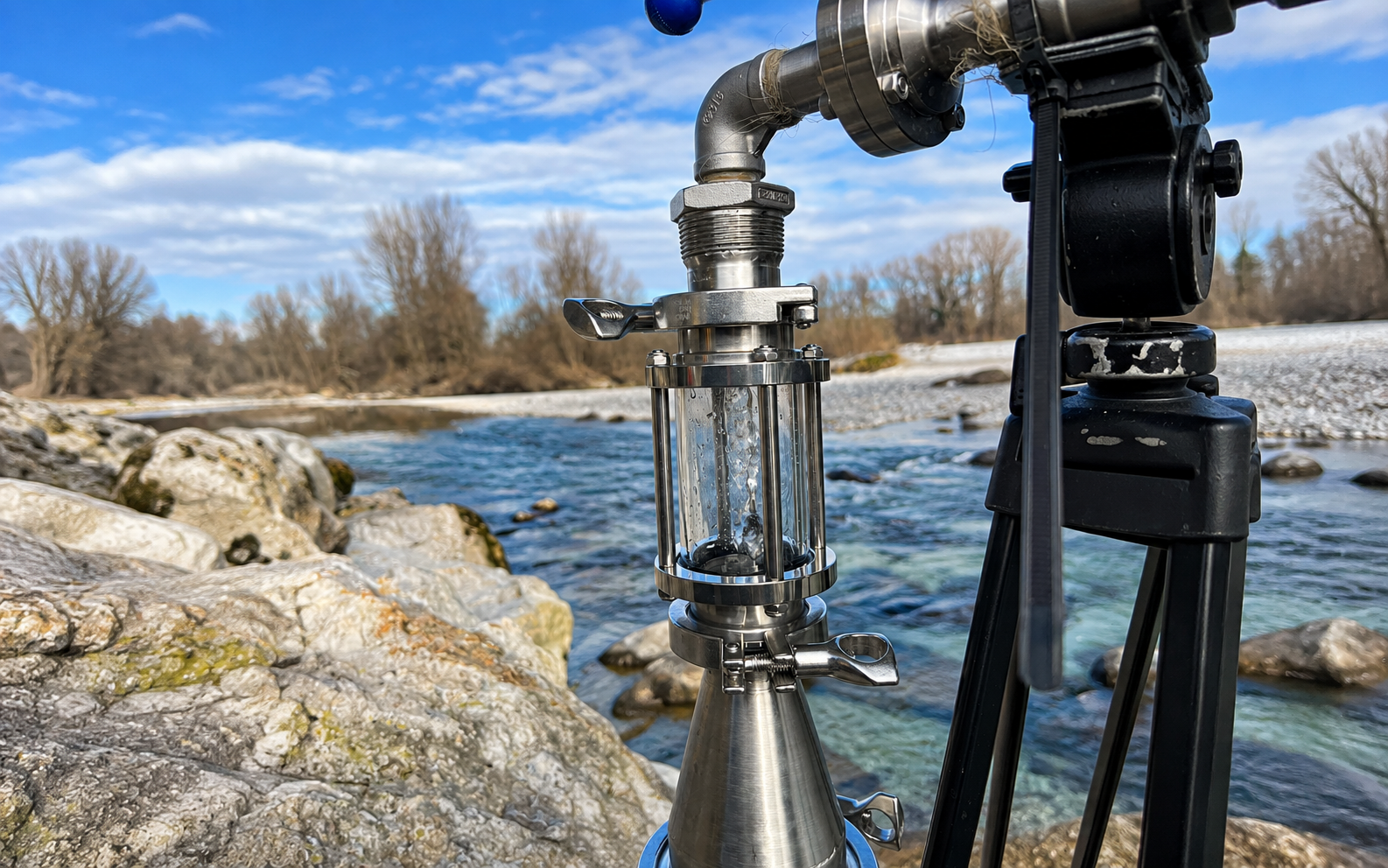
The TETHYS4ADRION project addresses pressing issues related to climate change and plastic waste pollution, focusing on rivers as transport pathways connecting land-based sources of waste with marine environments, particularly in the Adriatic-Ionian region. The Adriatic-Ionian Sea is exposed to anthropogenic pressures resulting from urbanization, tourism, agriculture, and industry, making it particularly vulnerable to pollution originating from rivers. The overall objective of TETHYS4ADRION is to develop a unified approach to managing waste pollution in watercourses, focusing on the pre-defined rivers (Isonzo/Soča, Neretva, Bojana/Buna), with particular emphasis on a) identifying the sources from which plastic waste enters rivers; b) developing practical and feasible measures to prevent plastic waste from entering rivers; and c) establishing policies, legislative frameworks, and guidelines that support the proposed measures for preventing the introduction of (plastic) waste into aquatic environments.
An important part of the TETHYS4ADRION project is also raising public awareness of the connection between waste management on land, river pollution and the condition of the sea. Therefore, in 2026, the Institute for water of the Republic of Slovenia carried out a dedicated awareness-raising activity aimed at demonstrating, in a simple and illustrative way, how litter can travel along a river and ultimately reach the sea.
For this purpose, 10 GPS trackers (https://www.izvrstna.si/sledilniki) were released in Čezsoča to simulate the movement of litter along the Soča River. Tracking their movement makes it possible to follow the journey that litter can take from land towards the sea, while also encouraging reflection on where and how its entry into watercourses can be prevented.